From Quote to Install: Where Fabrication Shops Actually Lose Money

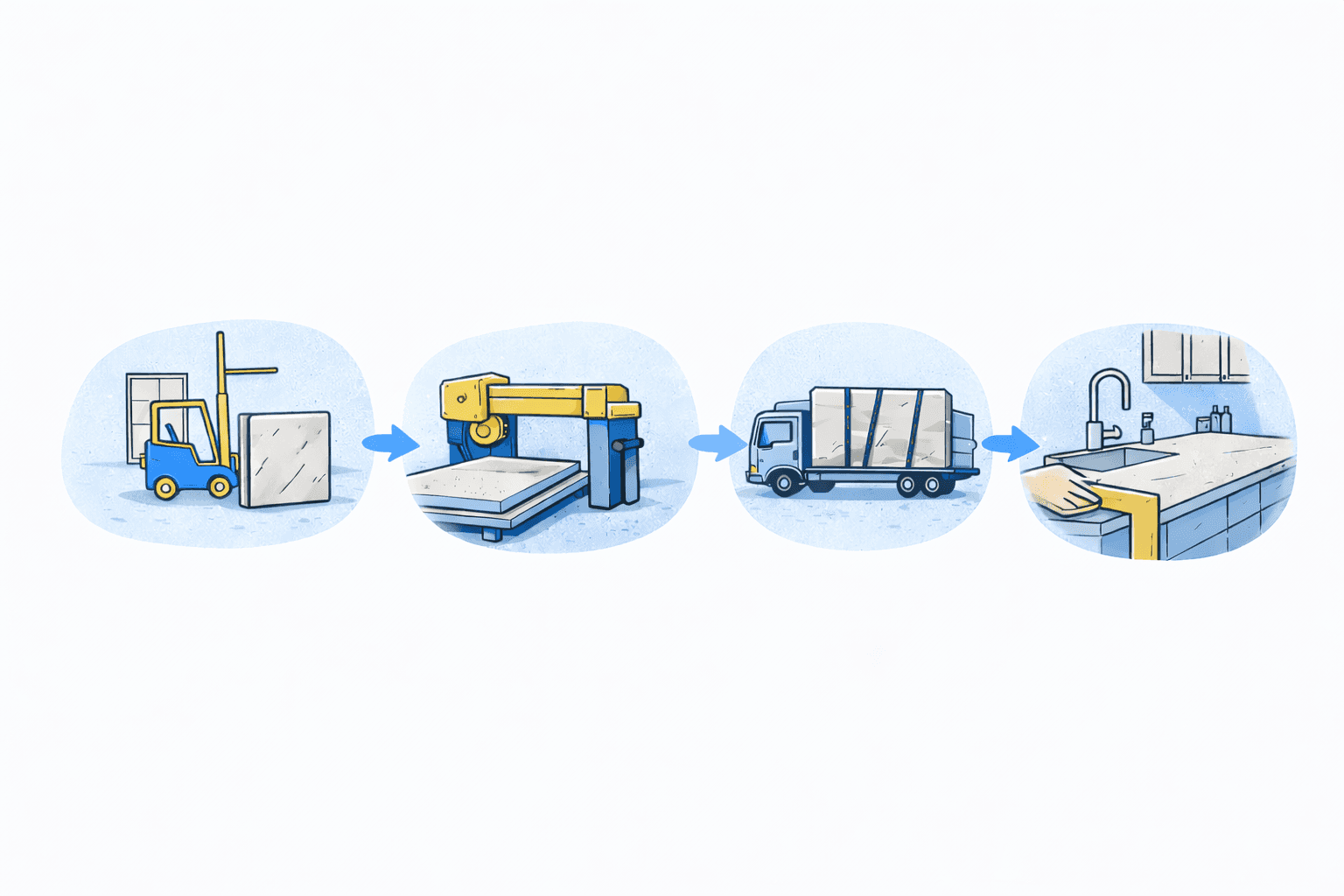
Every countertop job a fabrication shop runs travels through the same basic chain: marketing brings in a lead, sales turns it into a quote, the shop cuts and fabricates the material, a crew installs it, and the customer pays. On paper, that’s five links. In practice, it’s five places where margin can quietly disappear.
Most shop owners can tell you their revenue for the month. Far fewer can tell you which link in that chain is costing them the most. That’s usually where the real money is hiding.
The Chain Is Only as Strong as Its Weakest Link
A shop can be excellent at fabrication and still lose money if leads aren’t converting into quotes fast enough. A shop can close deals all day and still bleed margin if slab yield is poor or remakes are common. Profitability isn’t one number, it’s the product of how well every stage in that chain performs, and a weak link anywhere drags the whole thing down.
Here’s where the leaks tend to show up.
1. Inconsistent Lead Flow
Shops that rely on word of mouth or a handful of builder relationships often swing between two bad states: too busy to answer the phone, or too quiet with nothing to fabricate. Both are expensive. Idle shop time means fixed costs (rent, payroll, equipment) running with nothing to offset them. Overwhelmed intake means leads sit unanswered for hours or days, and speed-to-response is one of the strongest predictors of whether a quote turns into a signed job.
The fix isn’t complicated in concept. A steady, predictable pipeline of qualified leads, but it does require treating marketing as a system rather than an occasional push. Shops that work with a partner who understands the fabrication world specifically (Milia Marketing, for instance, works only with stone fabricators and K&B businesses) tend to get pipeline consistency faster than shops piecing together ads, SEO, and referrals on their own with no one owning the whole picture.
2. Slow or Inaccurate Quoting
A lead that goes cold while waiting on a quote is a lead that’s now shopping the shop down the road. Manual quoting involves measuring, pricing, and building proposals across spreadsheets and phone calls. It’s slow, and slow quotes lose jobs even when the eventual price would have been competitive. Inaccurate quotes are worse: they either scare off the customer with sticker shock or lock the shop into a job that underprices the material and labor actually required.
Digitizing the quote-to-project handoff, so pricing, materials, and layout all live in one system instead of getting re-entered by hand at every stage, tends to close this gap quickly. It also removes a common source of costly mistakes further down the chain, since a quote built on accurate slab and labor data carries forward correctly into production.
3. Poor Slab Yield and Avoidable Remakes
This is the leak most shops feel first because it shows up directly in material cost. Poor cutting layouts waste slab. Manual tracking makes it easy to grab the wrong piece or miscount inventory. And remakes mean cutting a piece again because of a measurement error, a miscommunicated edge detail, or a template that didn’t match the final layout. They are one of the most expensive line items in the business because the shop absorbs labor and material twice for revenue it only collects once.
Shops that have tightened this link usually point to the same root cause on the front end: better visibility into inventory and layout planning before the saw ever runs, not after.

4. Scheduling and Install Breakdowns
A job that’s fabricated correctly can still lose money at install if routing is inefficient, crews show up without the right paperwork, or a job gets delayed because a prior step wasn’t actually finished. Every failed install trip costs a truck roll, labor, and a frustrated customer. And frustrated customers don’t refer new business.
5. Slow Collections
Money sitting in accounts receivable is money that isn’t funding the next job. Shops running job costing separately from invoicing often don’t know a project’s true profitability until weeks after it closes, by which point it’s too late to correct anything.
A Composite Example
Consider a mid-size shop doing roughly $4M a year that noticed margins had drifted lower over 18 months, without any single dramatic problem. When they mapped their own chain, three leaks stood out: leads sat an average of days before first contact, slab yield was running below plan on a recurring basis, and remakes were eating roughly 3–4% of jobs. None of those looked catastrophic individually. Combined, they were quietly costing the equivalent of several full-time salaries a year. Fixing lead response time and tightening yield tracking closed most of the gap within two quarters by treating the chain as one connected system instead of five separate departments, rather than relying on a single big change.
Map Your Own Chain
Take fifteen minutes and walk your own business through these five stages: marketing, quoting, fabrication, installation, collections. For each one, ask yourself where this step loses time, material, or money that you don’t fully account for.
You probably already have a gut sense of the weakest link. That instinct is usually right, and it’s the cheapest place to start looking.
Inconsistent leads, slow response, or no one really owning the pipeline may point to marketing as your weak link. If so, it’s worth working with a specialist who only serves the fabrication industry rather than a generalist agency learning the vertical on your dime. But wherever the leak is, the bigger point holds: profitability isn’t found in one big fix. It’s found by tightening every link in the chain, one at a time.
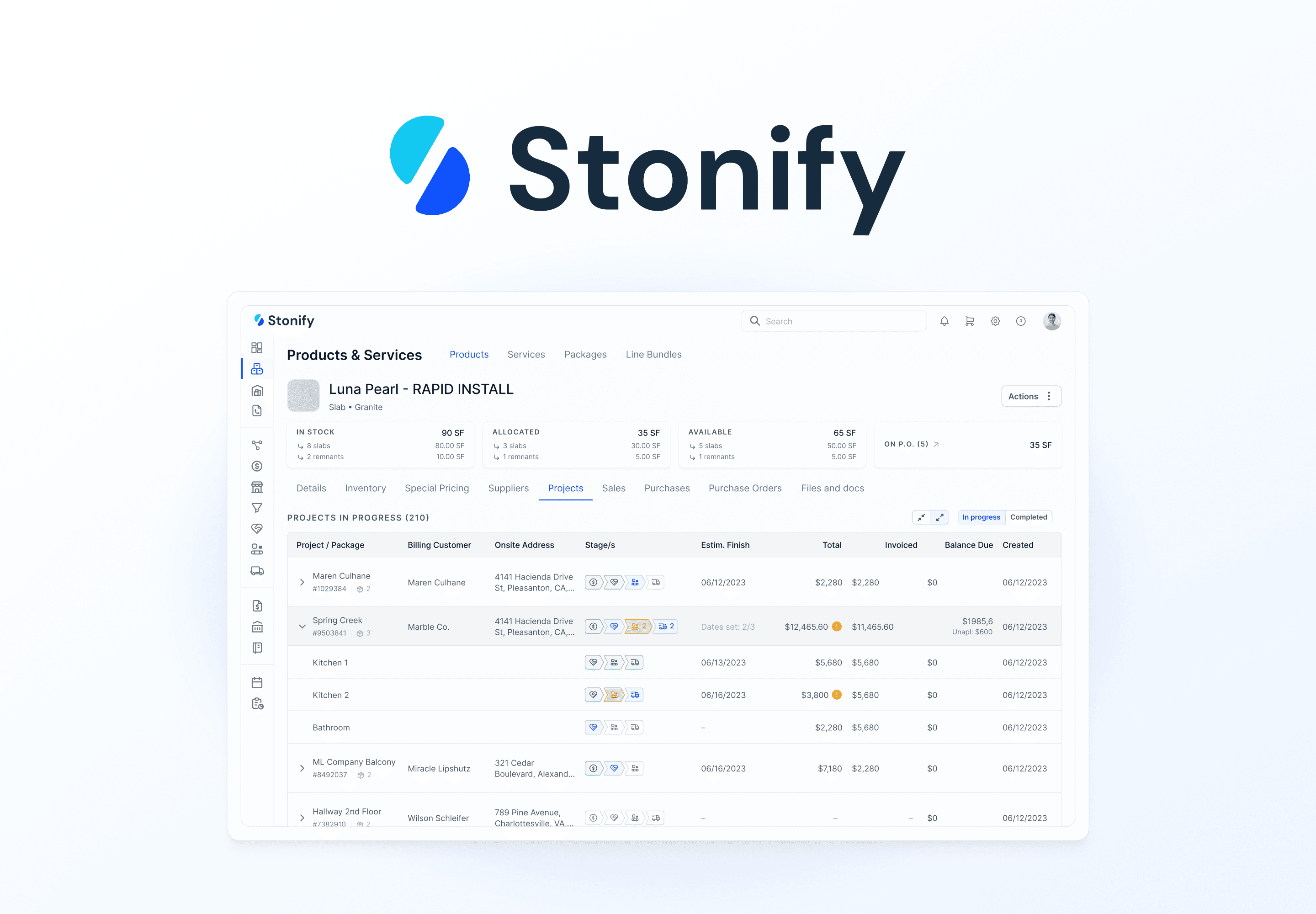
See where your own chain is leaking. Book a free demo of Stonify and get a clear look at how your quoting, inventory, scheduling, and job costing connect.
Ready to Run a Smarter Stone Operation?
Book a demo to see how Stonify can reduce costs at your shop.
Ready to Run a Smarter Stone Operation?
Book a demo to see how Stonify can reduce costs at your shop.

From Quote to Install: Where Fabrication Shops Actually Lose Money
Every countertop job a fabrication shop runs travels through the same basic chain: marketing brings in a lead, sales turns it into a quote, the shop cuts and fabricates the material, a crew installs it, and the customer pays. On paper, that’s five links. In practice, it’s five places where margin can quietly disappear.
Most shop owners can tell you their revenue for the month. Far fewer can tell you which link in that chain is costing them the most. That’s usually where the real money is hiding.
The Chain Is Only as Strong as Its Weakest Link
A shop can be excellent at fabrication and still lose money if leads aren’t converting into quotes fast enough. A shop can close deals all day and still bleed margin if slab yield is poor or remakes are common. Profitability isn’t one number, it’s the product of how well every stage in that chain performs, and a weak link anywhere drags the whole thing down.
Here’s where the leaks tend to show up.
1. Inconsistent Lead Flow
Shops that rely on word of mouth or a handful of builder relationships often swing between two bad states: too busy to answer the phone, or too quiet with nothing to fabricate. Both are expensive. Idle shop time means fixed costs (rent, payroll, equipment) running with nothing to offset them. Overwhelmed intake means leads sit unanswered for hours or days, and speed-to-response is one of the strongest predictors of whether a quote turns into a signed job.
The fix isn’t complicated in concept. A steady, predictable pipeline of qualified leads, but it does require treating marketing as a system rather than an occasional push. Shops that work with a partner who understands the fabrication world specifically (Milia Marketing, for instance, works only with stone fabricators and K&B businesses) tend to get pipeline consistency faster than shops piecing together ads, SEO, and referrals on their own with no one owning the whole picture.
2. Slow or Inaccurate Quoting
A lead that goes cold while waiting on a quote is a lead that’s now shopping the shop down the road. Manual quoting involves measuring, pricing, and building proposals across spreadsheets and phone calls. It’s slow, and slow quotes lose jobs even when the eventual price would have been competitive. Inaccurate quotes are worse: they either scare off the customer with sticker shock or lock the shop into a job that underprices the material and labor actually required.
Digitizing the quote-to-project handoff, so pricing, materials, and layout all live in one system instead of getting re-entered by hand at every stage, tends to close this gap quickly. It also removes a common source of costly mistakes further down the chain, since a quote built on accurate slab and labor data carries forward correctly into production.
3. Poor Slab Yield and Avoidable Remakes
This is the leak most shops feel first because it shows up directly in material cost. Poor cutting layouts waste slab. Manual tracking makes it easy to grab the wrong piece or miscount inventory. And remakes mean cutting a piece again because of a measurement error, a miscommunicated edge detail, or a template that didn’t match the final layout. They are one of the most expensive line items in the business because the shop absorbs labor and material twice for revenue it only collects once.
Shops that have tightened this link usually point to the same root cause on the front end: better visibility into inventory and layout planning before the saw ever runs, not after.
4. Scheduling and Install Breakdowns
A job that’s fabricated correctly can still lose money at install if routing is inefficient, crews show up without the right paperwork, or a job gets delayed because a prior step wasn’t actually finished. Every failed install trip costs a truck roll, labor, and a frustrated customer. And frustrated customers don’t refer new business.
5. Slow Collections
Money sitting in accounts receivable is money that isn’t funding the next job. Shops running job costing separately from invoicing often don’t know a project’s true profitability until weeks after it closes, by which point it’s too late to correct anything.
A Composite Example
Consider a mid-size shop doing roughly $4M a year that noticed margins had drifted lower over 18 months, without any single dramatic problem. When they mapped their own chain, three leaks stood out: leads sat an average of days before first contact, slab yield was running below plan on a recurring basis, and remakes were eating roughly 3–4% of jobs. None of those looked catastrophic individually. Combined, they were quietly costing the equivalent of several full-time salaries a year. Fixing lead response time and tightening yield tracking closed most of the gap within two quarters by treating the chain as one connected system instead of five separate departments, rather than relying on a single big change.
Map Your Own Chain
Take fifteen minutes and walk your own business through these five stages: marketing, quoting, fabrication, installation, collections. For each one, ask yourself where this step loses time, material, or money that you don’t fully account for.
You probably already have a gut sense of the weakest link. That instinct is usually right, and it’s the cheapest place to start looking.
Inconsistent leads, slow response, or no one really owning the pipeline may point to marketing as your weak link. If so, it’s worth working with a specialist who only serves the fabrication industry rather than a generalist agency learning the vertical on your dime. But wherever the leak is, the bigger point holds: profitability isn’t found in one big fix. It’s found by tightening every link in the chain, one at a time.
See where your own chain is leaking. Book a free demo of Stonify and get a clear look at how your quoting, inventory, scheduling, and job costing connect.
Ready to Run a Smarter Stone Operation?
Book a demo to see how Stonify can reduce costs at your shop.