Modern Alternatives to Legacy Software for Stone Fabrication Companies

Many countertop fabrication companies rely on specialized software to manage quoting, production workflows, slab inventory, installation scheduling, and financial reporting. Platforms such as Moraware have been used by fabrication shops for many years to help organize these processes.
As fabrication businesses grow, their operational needs often evolve as well. Managing a higher volume of projects, coordinating fabrication and installation teams, and tracking materials across the shop can require better visibility and coordination between different parts of the business.
When fabrication companies evaluate software solutions, they often look for systems that support quoting, inventory tracking, scheduling, and reporting in a connected workflow.
Why Fabrication Companies Start Evaluating Alternatives
For many shops, the decision to explore different software does not happen overnight. It usually develops gradually as the business grows.
Several common situations often lead fabrication companies to review their current systems.
Growing project volume
As fabrication companies handle more projects at the same time, coordinating sales, production, and installation becomes more challenging. Businesses often look for software that helps teams stay aligned as operations scale.
Managing slab inventory more efficiently
Stone slabs represent one of the largest material costs for fabrication companies. When slab tracking is handled manually or across multiple systems, it can become difficult to know which slabs are available, reserved, or already allocated to projects.
Improving inventory visibility is one reason many companies explore newer platforms.
Coordinating fabrication and installation schedules
Fabrication shops must coordinate production timelines with installation crews, deliveries, and customer availability. When scheduling tools are not connected to project workflows, coordination can become more time-consuming.
Improving reporting and operational insight
As businesses grow, owners and managers often want clearer insight into project profitability, production capacity, and material usage. Systems that connect operational data with reporting tools can make this easier.
Common Software Tools Used by Stone Fabrication Companies
Situation | What Happens in the Shop |
|---|---|
Growing number of projects | Teams struggle to keep quotes, production, and installation aligned |
Slab inventory becomes difficult to track | Materials may be reserved twice or remnants are hard to locate |
Scheduling becomes complicated | Installers, fabrication teams, and deliveries are harder to coordinate |
Multiple disconnected tools | Information must be entered into several systems |
Limited reporting visibility | Owners cannot easily see project profitability or operational performance |
How Fabrication Shops Typically Manage Their Software
Many fabrication companies operate with several different tools that each serve a specific purpose.
For example, a typical setup might include:
a CRM for managing customer inquiries
quoting tools or spreadsheets for estimates
layout or drawing software for fabrication planning
spreadsheets or inventory systems for slab tracking
calendars for installation scheduling
accounting software for financial reporting
While this approach can work, managing several disconnected tools can make it harder to maintain a clear overview of projects as the business grows.
This is one of the reasons some companies begin exploring more integrated fabrication platforms.
What Fabricators Often Look for in a Modern Platform
When fabrication companies evaluate software used in countertop fabrication, they usually focus on how well a system supports the entire lifecycle of a fabrication project.
Several capabilities tend to be especially important.
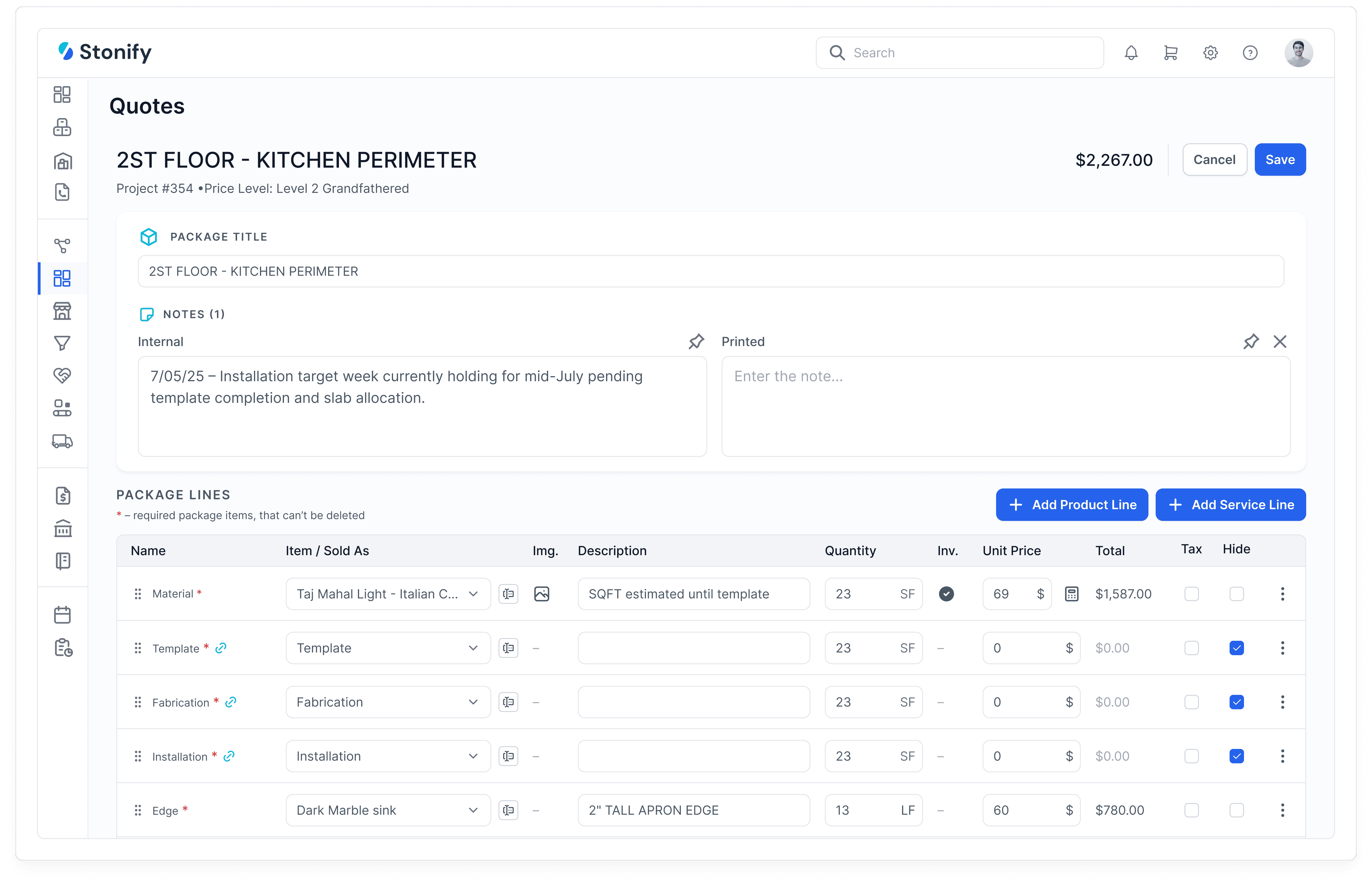
Quoting that connects directly to projects
Instead of recreating project data after a quote is accepted, many businesses prefer systems where quotes convert directly into active projects.
Slab inventory connected to fabrication workflows
Modern systems often allow fabrication teams to track slabs digitally, allocate materials to projects, and monitor remnants created during fabrication.
Production and installation coordination
Connecting fabrication progress with installation scheduling can help teams avoid delays and improve coordination between departments.
Vendor and supplier management
Tracking suppliers, material orders, and deliveries within the same system can simplify purchasing and inventory management.
Operational reporting
When project data, inventory usage, and financial information are connected, businesses gain better visibility into overall performance.
Key Capabilities Fabrication Companies Look For
Capability | Why It Matters |
|---|---|
Project-based quoting | Quotes convert directly into fabrication projects |
Slab inventory tracking | Teams know which slabs are available or reserved |
Layout and takeoff | Measurements and fabrication details stay connected to the project |
Production and installation scheduling | Fabrication progress and install dates stay aligned |
Vendor and supplier tracking | Material orders and deliveries are easier to manage |
Financial reporting | Business owners can see job profitability and costs |
Mobile access | Installers and warehouse staff can update jobs from the field |
Example of a Modern Fabrication Platform
Several newer platforms have been developed specifically for countertop fabrication businesses and aim to connect these workflows in a single system.
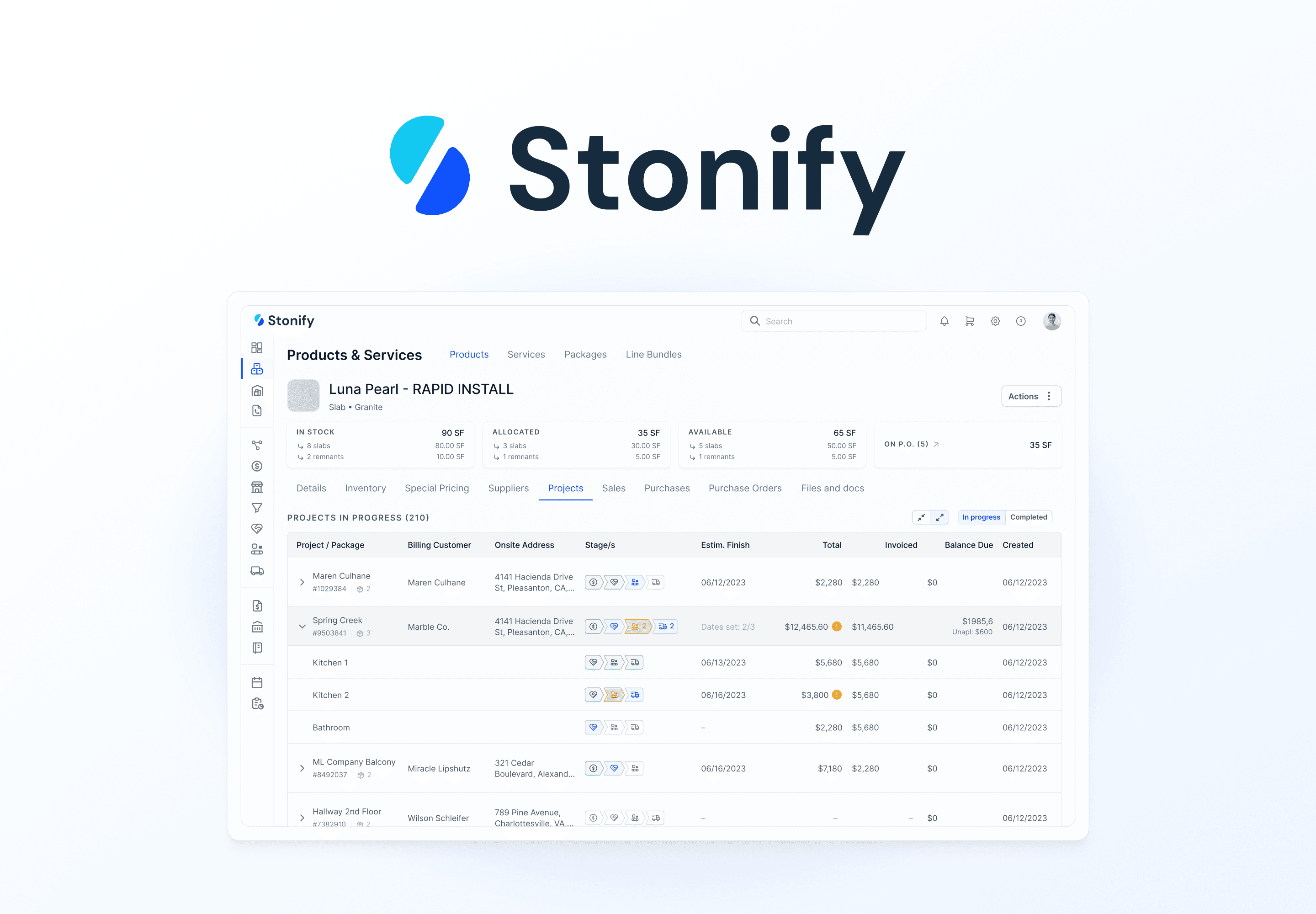
For example, Stonify provides tools that help fabrication companies manage operations such as quoting, slab inventory tracking, project coordination, scheduling, vendor management, and financial reporting.
Platforms like this focus on connecting different operational areas so teams can work with the same information rather than switching between multiple systems.
For fabrication businesses handling a growing number of projects, this type of connected workflow can simplify daily operations.
When It May Make Sense to Review Your Software
Every fabrication business operates differently, so there is no single moment when companies should change systems. However, many shops begin reviewing their software when they experience situations such as:
opening additional fabrication locations
managing a larger volume of projects
needing better insight into project profitability
spending significant time coordinating information across different tools
Evaluating alternative platforms can help businesses determine whether a more connected system might improve efficiency.
Related Guide
If you are comparing different platforms used in the industry, you may also find this guide helpful:
Best Countertop Fabrication Software
It explains what fabrication companies typically look for when choosing software and how different types of platforms support fabrication workflows.
Final Thoughts
Stone fabrication businesses depend on reliable systems to manage complex operations that include sales, fabrication, installation, inventory management, and financial reporting.
While many companies have used specialized industry software for years, newer fabrication platforms are increasingly focused on connecting these workflows into a single operational system.
For fabrication companies evaluating modern software solutions, understanding how different platforms support real-world fabrication workflows is an important step in choosing the right system for their business.
Ready to Run a Smarter Stone Operation?
Book a demo to see how Stonify can reduce costs at your shop.
Ready to Run a Smarter Stone Operation?
Book a demo to see how Stonify can reduce costs at your shop.
Modern Alternatives to Legacy Software for Stone Fabrication Companies
Many countertop fabrication companies rely on specialized software to manage quoting, production workflows, slab inventory, installation scheduling, and financial reporting. Platforms such as Moraware have been used by fabrication shops for many years to help organize these processes.
As fabrication businesses grow, their operational needs often evolve as well. Managing a higher volume of projects, coordinating fabrication and installation teams, and tracking materials across the shop can require better visibility and coordination between different parts of the business.
When fabrication companies evaluate software solutions, they often look for systems that support quoting, inventory tracking, scheduling, and reporting in a connected workflow.
Why Fabrication Companies Start Evaluating Alternatives
For many shops, the decision to explore different software does not happen overnight. It usually develops gradually as the business grows.
Several common situations often lead fabrication companies to review their current systems.
Growing project volume
As fabrication companies handle more projects at the same time, coordinating sales, production, and installation becomes more challenging. Businesses often look for software that helps teams stay aligned as operations scale.
Managing slab inventory more efficiently
Stone slabs represent one of the largest material costs for fabrication companies. When slab tracking is handled manually or across multiple systems, it can become difficult to know which slabs are available, reserved, or already allocated to projects.
Improving inventory visibility is one reason many companies explore newer platforms.
Coordinating fabrication and installation schedules
Fabrication shops must coordinate production timelines with installation crews, deliveries, and customer availability. When scheduling tools are not connected to project workflows, coordination can become more time-consuming.
Improving reporting and operational insight
As businesses grow, owners and managers often want clearer insight into project profitability, production capacity, and material usage. Systems that connect operational data with reporting tools can make this easier.
Common Software Tools Used by Stone Fabrication Companies
Situation | What Happens in the Shop |
|---|---|
Growing number of projects | Teams struggle to keep quotes, production, and installation aligned |
Slab inventory becomes difficult to track | Materials may be reserved twice or remnants are hard to locate |
Scheduling becomes complicated | Installers, fabrication teams, and deliveries are harder to coordinate |
Multiple disconnected tools | Information must be entered into several systems |
Limited reporting visibility | Owners cannot easily see project profitability or operational performance |
How Fabrication Shops Typically Manage Their Software
Many fabrication companies operate with several different tools that each serve a specific purpose.
For example, a typical setup might include:
a CRM for managing customer inquiries
quoting tools or spreadsheets for estimates
layout or drawing software for fabrication planning
spreadsheets or inventory systems for slab tracking
calendars for installation scheduling
accounting software for financial reporting
While this approach can work, managing several disconnected tools can make it harder to maintain a clear overview of projects as the business grows.
This is one of the reasons some companies begin exploring more integrated fabrication platforms.
What Fabricators Often Look for in a Modern Platform
When fabrication companies evaluate software used in countertop fabrication, they usually focus on how well a system supports the entire lifecycle of a fabrication project.
Several capabilities tend to be especially important.
Quoting that connects directly to projects
Instead of recreating project data after a quote is accepted, many businesses prefer systems where quotes convert directly into active projects.
Slab inventory connected to fabrication workflows
Modern systems often allow fabrication teams to track slabs digitally, allocate materials to projects, and monitor remnants created during fabrication.
Production and installation coordination
Connecting fabrication progress with installation scheduling can help teams avoid delays and improve coordination between departments.
Vendor and supplier management
Tracking suppliers, material orders, and deliveries within the same system can simplify purchasing and inventory management.
Operational reporting
When project data, inventory usage, and financial information are connected, businesses gain better visibility into overall performance.
Key Capabilities Fabrication Companies Look For
Capability | Why It Matters |
|---|---|
Project-based quoting | Quotes convert directly into fabrication projects |
Slab inventory tracking | Teams know which slabs are available or reserved |
Layout and takeoff | Measurements and fabrication details stay connected to the project |
Production and installation scheduling | Fabrication progress and install dates stay aligned |
Vendor and supplier tracking | Material orders and deliveries are easier to manage |
Financial reporting | Business owners can see job profitability and costs |
Mobile access | Installers and warehouse staff can update jobs from the field |
Example of a Modern Fabrication Platform
Several newer platforms have been developed specifically for countertop fabrication businesses and aim to connect these workflows in a single system.
For example, Stonify provides tools that help fabrication companies manage operations such as quoting, slab inventory tracking, project coordination, scheduling, vendor management, and financial reporting.
Platforms like this focus on connecting different operational areas so teams can work with the same information rather than switching between multiple systems.
For fabrication businesses handling a growing number of projects, this type of connected workflow can simplify daily operations.
When It May Make Sense to Review Your Software
Every fabrication business operates differently, so there is no single moment when companies should change systems. However, many shops begin reviewing their software when they experience situations such as:
opening additional fabrication locations
managing a larger volume of projects
needing better insight into project profitability
spending significant time coordinating information across different tools
Evaluating alternative platforms can help businesses determine whether a more connected system might improve efficiency.
Related Guide
If you are comparing different platforms used in the industry, you may also find this guide helpful:
Best Countertop Fabrication Software
It explains what fabrication companies typically look for when choosing software and how different types of platforms support fabrication workflows.
Final Thoughts
Stone fabrication businesses depend on reliable systems to manage complex operations that include sales, fabrication, installation, inventory management, and financial reporting.
While many companies have used specialized industry software for years, newer fabrication platforms are increasingly focused on connecting these workflows into a single operational system.
For fabrication companies evaluating modern software solutions, understanding how different platforms support real-world fabrication workflows is an important step in choosing the right system for their business.
Ready to Run a Smarter Stone Operation?
Book a demo to see how Stonify can reduce costs at your shop.