How to Follow Up on a Countertop Quote Without Chasing the Customer

The best follow-up on a countertop quote helps the customer make a decision. Confirm that they received the estimate, ask what still needs to be resolved, and offer a specific next step. Give every open quote an owner and a next contact date. Keep the message tied to the actual project, whether the sticking point is the slab, the scope, the schedule, or the price. Stop when the customer declines or asks you to.
Picture a familiar week: You send a quote for a quartz kitchen on Tuesday. The customer liked the sample in your showroom and asked about installation next month. By Friday, you have heard nothing. The office is dealing with a sink that arrived damaged, an installer has a site question, and the quote slips down the inbox.
The awkward part is deciding whether to call. You do not want to pester someone who is comparing options. Yet you also do not know whether the customer saw the quote, understood what it includes, or still wants the job. A useful follow-up clears up that uncertainty. It should give the customer a reason to reply, even if the answer is no.
Why Countertop Quotes Go Quiet
An unanswered quote can mean several things, and price is only one of them. The customer may be waiting for cabinets, choosing between two stones, asking a partner to review the estimate, or comparing bids that include different work. They may also have hired someone else.
Those situations need different responses. A repeated “just checking in” email asks the customer to do the work of restarting the conversation. A specific question makes the next step easier.
Before contacting the customer, read the quote and your last conversation. Look for the decision they were trying to make:
What you know | Useful question to ask |
|---|---|
They were choosing between two slabs | “Would it help to see the price difference between the two materials?” |
Cabinet installation was still pending | “Do you have a target date for the cabinets? I can explain when templating would fit.” |
They asked whether removal was included | “Would you like me to show tear-out as a separate line so you can compare the options?” |
A builder or partner needs to approve | “Is there anything I can clarify for the person reviewing the estimate with you?” |
If you do not know the reason, ask one open question. Do not guess that the customer is objecting to price, and do not offer a discount before you understand the problem.
Make the Next Step Clear When You Send the Quote
Follow-up is easier when the estimate itself answers the basic questions. The customer should be able to see the chosen material, what fabrication and installation include, the major exclusions, the price, and what happens after approval. For a custom job, identify anything that may change after the final template or slab layout.
Send the estimate with a short note that names the project and invites one clear action:
Hi Maya, attached is the estimate for your kitchen in 3 cm [stone name]. It includes the eased edge, sink cutout, templating, and installation. The full-height backsplash is shown as a separate option. If the scope looks right, reply here and I can walk you through the next step. If you want to compare the other slab, I can price that version too.
If the customer already told you when they will decide, record that date. A contractor waiting for an owner approval may need a different schedule from a homeowner who plans to visit the slab yard this weekend.

When Should You Follow Up on a Countertop Estimate?
There is no universal number of days. Use the decision date the customer gave you. When they have not given one, the sequence below is a reasonable starting point for a residential quote. Adjust it for commercial bids, long renovation timelines, and any request for less contact.
After sending: Check that the estimate reached the right person and that the scope is clear. This can be part of the original email; it does not require an extra message.
A few business days later: Ask one project-specific question. Offer to clarify an option, material choice, or included service.
Around the next agreed milestone: Follow up when the customer expected to have cabinets, financing, builder approval, or a slab selection. If there is no milestone, one more message about a week after the first follow-up is usually enough to learn whether the project is still active.
At a real quote expiry or availability change: Explain what actually changed. If supplier pricing or a reserved slab has a documented deadline, say so plainly. Never invent a deadline to create urgency.
If there is still no response, send a brief close-out note and stop the sequence. A quiet file is useful information; it should not sit in your active forecast forever.
What to Say in the Follow-Up
Keep each message short enough to read on a phone. Name the job, make one helpful offer, and ask one question. These examples are starting points, not scripts to send unchanged.
When the Customer May Need an Option
Hi Maya, I wanted to follow up on the quartz kitchen estimate I sent Thursday. You were deciding between the two white slabs. Would it help if I sent a version showing the total for each one? That may make the choice easier than comparing slab prices alone.
This works because the message returns to a decision the customer already mentioned. It does not assume that price is the only issue.
When the Schedule Is Unclear
Hi Maya, is your cabinet installation still planned for mid-November? If so, I can explain what we would need before templating and give you a realistic next step. If the remodel has moved, no problem; I can update the timing on our side.
Only mention an installation opening if you have checked the schedule and can actually offer it. A false hold creates a problem for both the customer and the shop.
When You Need to Close the Loop
Hi Maya, I have not heard back about the kitchen estimate, so I will close it out for now. If the project is still moving, reply here and I can confirm the current material price and timing before we proceed. Thanks for considering us.
The message gives the customer an easy way back without pretending that an old price or schedule is still guaranteed.

Track the Next Action, Not Just the Quote Total
A folder of sent PDFs cannot tell you what needs attention today. For each open quote, record the customer, the person responsible for following up, the date it was sent, the last conversation, and the next action date. Add a short reason when the customer is waiting: “cabinet date unknown” is more useful than “pending.”
Review open quotes at a regular time each week. Start with quotes that have no next action, then look at those past their agreed decision date. When a customer declines, record the reason if they offer one. That helps you distinguish a true price objection from a scope mismatch, a delayed renovation, or a project that was never ready to buy.
Do not treat every unanswered quote as recoverable revenue. A cleaner list helps your team spend time on customers who still have a live decision to make.

How Stonify Can Support the Process
Stonify keeps material selections, pricing, notes, quantities, and job details together in the quote. Its Sales Pipeline module shows stale leads and quotes, giving the team a way to spot records that need attention. The follow-up message still needs a person who knows the customer and can answer the right question. Stonify’s quoting and estimating page explains the connected quote workflow, and the Sales Pipeline release note describes the stale-quote view.
See Which Quotes Need a Real Next Step
Book a Stonify demo to see how quote details stay connected and how your team can find stale quotes. Bring one example of a quote that went quiet; you can review what information your team would need to follow up well.
Ready to Run a Smarter Stone Operation?
Book a demo to see how Stonify can reduce costs at your shop.
Ready to Run a Smarter Stone Operation?
Book a demo to see how Stonify can reduce costs at your shop.
Other Articles

From Quote to Install: Where Fabrication Shops Actually Lose Money
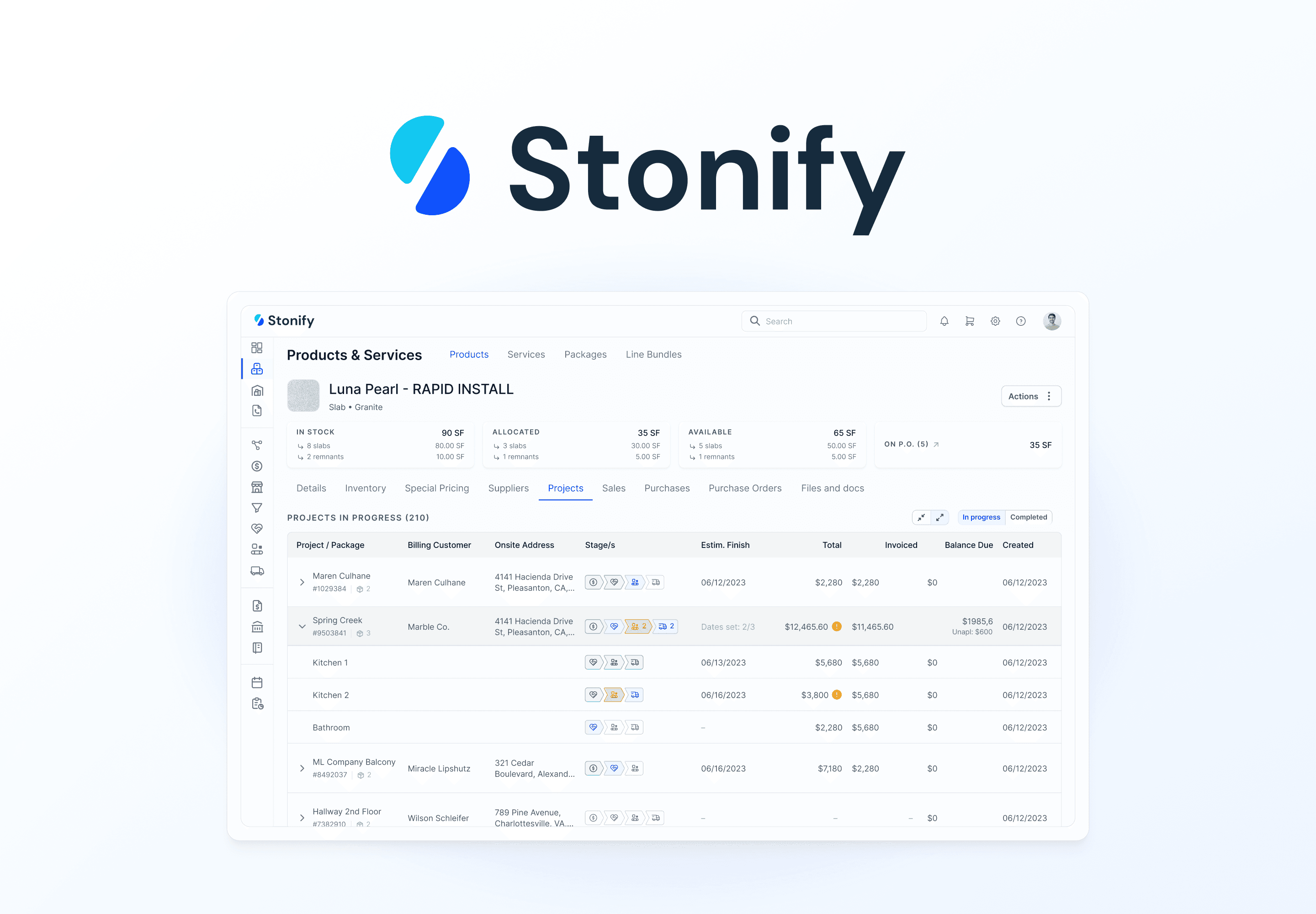
What Is Stonify? The All-in-One ERP for Stone Fabrication Shops

Modern Alternatives to Legacy Software for Stone Fabrication Companies
Why Stone Fabricators Lose Money Without Realizing It
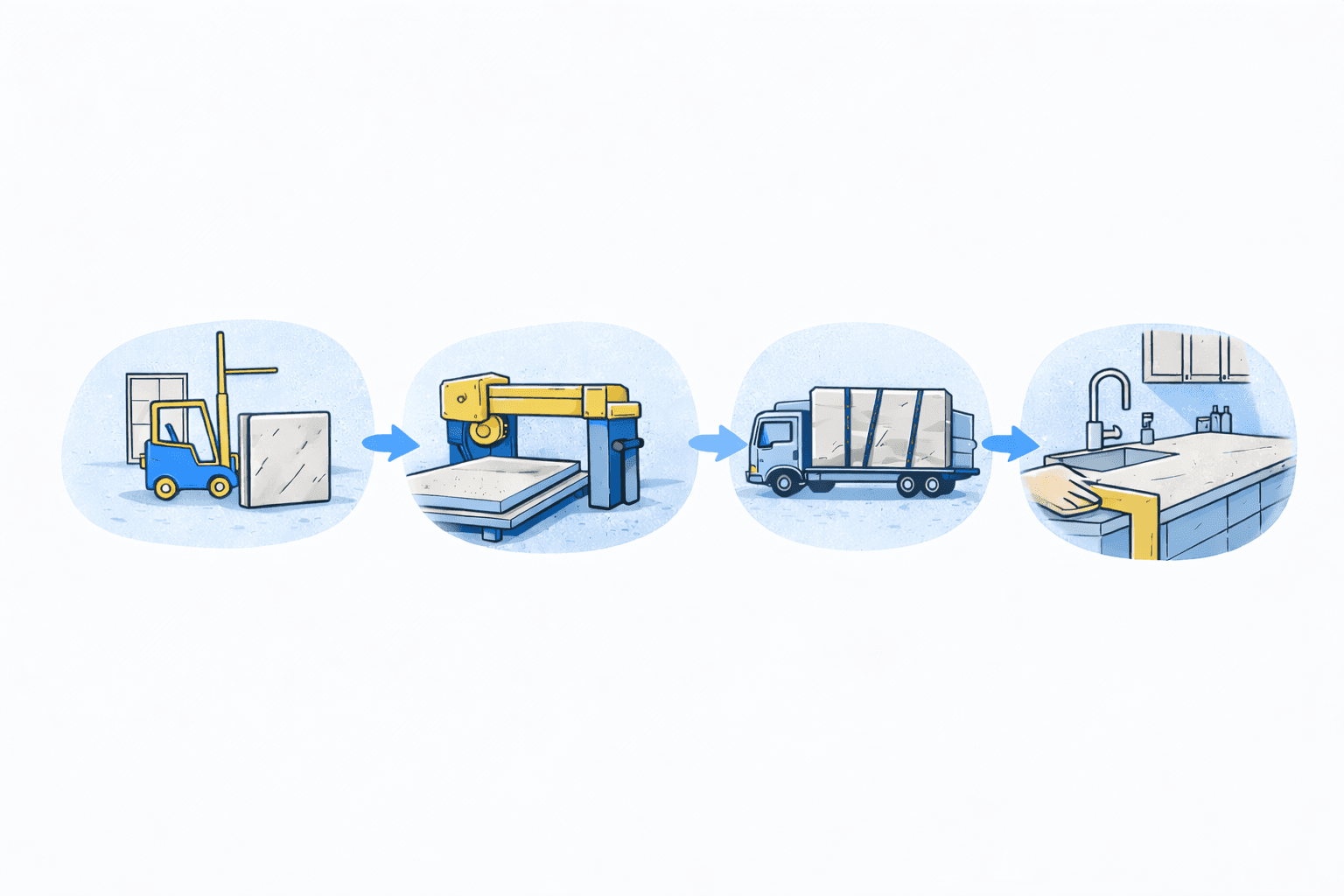
How a Stone Fabrication Shop Works: From Slab to Installation
How to Follow Up on a Countertop Quote Without Chasing the Customer
The best follow-up on a countertop quote helps the customer make a decision. Confirm that they received the estimate, ask what still needs to be resolved, and offer a specific next step. Give every open quote an owner and a next contact date. Keep the message tied to the actual project, whether the sticking point is the slab, the scope, the schedule, or the price. Stop when the customer declines or asks you to.
Picture a familiar week: You send a quote for a quartz kitchen on Tuesday. The customer liked the sample in your showroom and asked about installation next month. By Friday, you have heard nothing. The office is dealing with a sink that arrived damaged, an installer has a site question, and the quote slips down the inbox.
The awkward part is deciding whether to call. You do not want to pester someone who is comparing options. Yet you also do not know whether the customer saw the quote, understood what it includes, or still wants the job. A useful follow-up clears up that uncertainty. It should give the customer a reason to reply, even if the answer is no.
Why Countertop Quotes Go Quiet
An unanswered quote can mean several things, and price is only one of them. The customer may be waiting for cabinets, choosing between two stones, asking a partner to review the estimate, or comparing bids that include different work. They may also have hired someone else.
Those situations need different responses. A repeated “just checking in” email asks the customer to do the work of restarting the conversation. A specific question makes the next step easier.
Before contacting the customer, read the quote and your last conversation. Look for the decision they were trying to make:
What you know | Useful question to ask |
|---|---|
They were choosing between two slabs | “Would it help to see the price difference between the two materials?” |
Cabinet installation was still pending | “Do you have a target date for the cabinets? I can explain when templating would fit.” |
They asked whether removal was included | “Would you like me to show tear-out as a separate line so you can compare the options?” |
A builder or partner needs to approve | “Is there anything I can clarify for the person reviewing the estimate with you?” |
If you do not know the reason, ask one open question. Do not guess that the customer is objecting to price, and do not offer a discount before you understand the problem.
Make the Next Step Clear When You Send the Quote
Follow-up is easier when the estimate itself answers the basic questions. The customer should be able to see the chosen material, what fabrication and installation include, the major exclusions, the price, and what happens after approval. For a custom job, identify anything that may change after the final template or slab layout.
Send the estimate with a short note that names the project and invites one clear action:
Hi Maya, attached is the estimate for your kitchen in 3 cm [stone name]. It includes the eased edge, sink cutout, templating, and installation. The full-height backsplash is shown as a separate option. If the scope looks right, reply here and I can walk you through the next step. If you want to compare the other slab, I can price that version too.
If the customer already told you when they will decide, record that date. A contractor waiting for an owner approval may need a different schedule from a homeowner who plans to visit the slab yard this weekend.
When Should You Follow Up on a Countertop Estimate?
There is no universal number of days. Use the decision date the customer gave you. When they have not given one, the sequence below is a reasonable starting point for a residential quote. Adjust it for commercial bids, long renovation timelines, and any request for less contact.
After sending: Check that the estimate reached the right person and that the scope is clear. This can be part of the original email; it does not require an extra message.
A few business days later: Ask one project-specific question. Offer to clarify an option, material choice, or included service.
Around the next agreed milestone: Follow up when the customer expected to have cabinets, financing, builder approval, or a slab selection. If there is no milestone, one more message about a week after the first follow-up is usually enough to learn whether the project is still active.
At a real quote expiry or availability change: Explain what actually changed. If supplier pricing or a reserved slab has a documented deadline, say so plainly. Never invent a deadline to create urgency.
If there is still no response, send a brief close-out note and stop the sequence. A quiet file is useful information; it should not sit in your active forecast forever.
What to Say in the Follow-Up
Keep each message short enough to read on a phone. Name the job, make one helpful offer, and ask one question. These examples are starting points, not scripts to send unchanged.
When the Customer May Need an Option
Hi Maya, I wanted to follow up on the quartz kitchen estimate I sent Thursday. You were deciding between the two white slabs. Would it help if I sent a version showing the total for each one? That may make the choice easier than comparing slab prices alone.
This works because the message returns to a decision the customer already mentioned. It does not assume that price is the only issue.
When the Schedule Is Unclear
Hi Maya, is your cabinet installation still planned for mid-November? If so, I can explain what we would need before templating and give you a realistic next step. If the remodel has moved, no problem; I can update the timing on our side.
Only mention an installation opening if you have checked the schedule and can actually offer it. A false hold creates a problem for both the customer and the shop.
When You Need to Close the Loop
Hi Maya, I have not heard back about the kitchen estimate, so I will close it out for now. If the project is still moving, reply here and I can confirm the current material price and timing before we proceed. Thanks for considering us.
The message gives the customer an easy way back without pretending that an old price or schedule is still guaranteed.
Track the Next Action, Not Just the Quote Total
A folder of sent PDFs cannot tell you what needs attention today. For each open quote, record the customer, the person responsible for following up, the date it was sent, the last conversation, and the next action date. Add a short reason when the customer is waiting: “cabinet date unknown” is more useful than “pending.”
Review open quotes at a regular time each week. Start with quotes that have no next action, then look at those past their agreed decision date. When a customer declines, record the reason if they offer one. That helps you distinguish a true price objection from a scope mismatch, a delayed renovation, or a project that was never ready to buy.
Do not treat every unanswered quote as recoverable revenue. A cleaner list helps your team spend time on customers who still have a live decision to make.
How Stonify Can Support the Process
Stonify keeps material selections, pricing, notes, quantities, and job details together in the quote. Its Sales Pipeline module shows stale leads and quotes, giving the team a way to spot records that need attention. The follow-up message still needs a person who knows the customer and can answer the right question. Stonify’s quoting and estimating page explains the connected quote workflow, and the Sales Pipeline release note describes the stale-quote view.
See Which Quotes Need a Real Next Step
Book a Stonify demo to see how quote details stay connected and how your team can find stale quotes. Bring one example of a quote that went quiet; you can review what information your team would need to follow up well.
Ready to Run a Smarter Stone Operation?
Book a demo to see how Stonify can reduce costs at your shop.