Best Software for Countertop Fabrication Companies
Running a countertop fabrication business involves far more than cutting and installing stone. Fabrication shops must manage customer inquiries, prepare quotes, design layouts, track slab inventory, coordinate fabrication, schedule installations, and handle financial reporting.
Many companies attempt to manage these tasks using a combination of different tools. It is common to see fabrication businesses relying on spreadsheets for slab inventory, QuickBooks for accounting, separate layout software for drawings, and scheduling tools for installation crews.
While each tool may work individually, using multiple disconnected systems often creates operational challenges. Important information becomes scattered across platforms, teams must manually re-enter data, and it becomes difficult to maintain a clear overview of projects and profitability.
Because of this, many fabrication companies are now searching for software specifically designed for countertop fabrication businesses.
In this guide, we will explore what fabrication companies should look for when evaluating software and how modern platforms are helping shops manage their operations more efficiently.
Why Most Fabrication Shops Use Multiple Tools
Many countertop businesses build their software stack gradually as they grow.
A typical setup may look like this:
While this approach works at first, it often leads to several problems as the company grows.
Fragmented Project Information
Sales teams, production teams, and installers may each rely on different tools to track the same project.Limited Inventory Visibility
Management teams often struggle to see how projects, materials, and finances connect.Poor Operational Visibility
Management teams often struggle to see how projects, materials, and finances connect.
For growing fabrication companies, these inefficiencies can slow down operations and increase the risk of costly mistakes.
What to Look for in Countertop Fabrication Software
Modern fabrication software aims to replace multiple disconnected tools with a single platform that manages the entire workflow.
When evaluating software, fabrication businesses should look for the following capabilities.
Customer and Lead Management
Every project begins with a customer inquiry. Software should allow teams to capture leads, store customer contact information, and track communication history.An integrated CRM ensures that sales teams and project managers always have access to the same customer information.
Quotes and Estimating
Creating accurate quotes is essential for maintaining profitability.
Good fabrication software should support:
itemized quotes
service pricing
material calculations
tax calculations
discount management
digital documents
Once approved, quotes should convert directly into active projects.
Drawing and Layout Planning
Fabrication planning requires accurate measurements and layout visualization. Advanced platforms may include tools that allow teams to design countertop layouts, optimize slab usage, and plan fabrication details before production begins.
This helps reduce material waste and improve fabrication efficiency.
Project and Installation Management
Once a quote is approved, teams must coordinate fabrication and installation.
Software should allow businesses to:
track project progress
assign tasks
schedule installations
manage job timelines
This ensures that everyone involved in the project understands the current status and next steps.
Slab Inventory and Warehouse Management
Stone fabrication companies depend heavily on material management.
Modern systems can help companies track:
slab inventory
remnants
warehouse stock
material allocation by project
barcode scanning and inventory audits
tooling and supply tracking
These features help prevent material shortages and improve inventory visibility.
Logistics and Scheduling
Installation teams often work across multiple job sites each day.
Software with logistics capabilities allows companies to:
plan installation routes on the map
assign crews
schedule deliveries
coordinate project timelines
lock scheduled calendars
Efficient scheduling helps companies complete more projects while reducing delays.
Vendor and Supplier Management
Fabrication companies regularly work with suppliers and subcontractors. Software should allow teams to manage supplier relationships, track purchase orders, and record vendor payments. Centralizing this information improves purchasing decisions and financial tracking.
Financial Management and Reporting
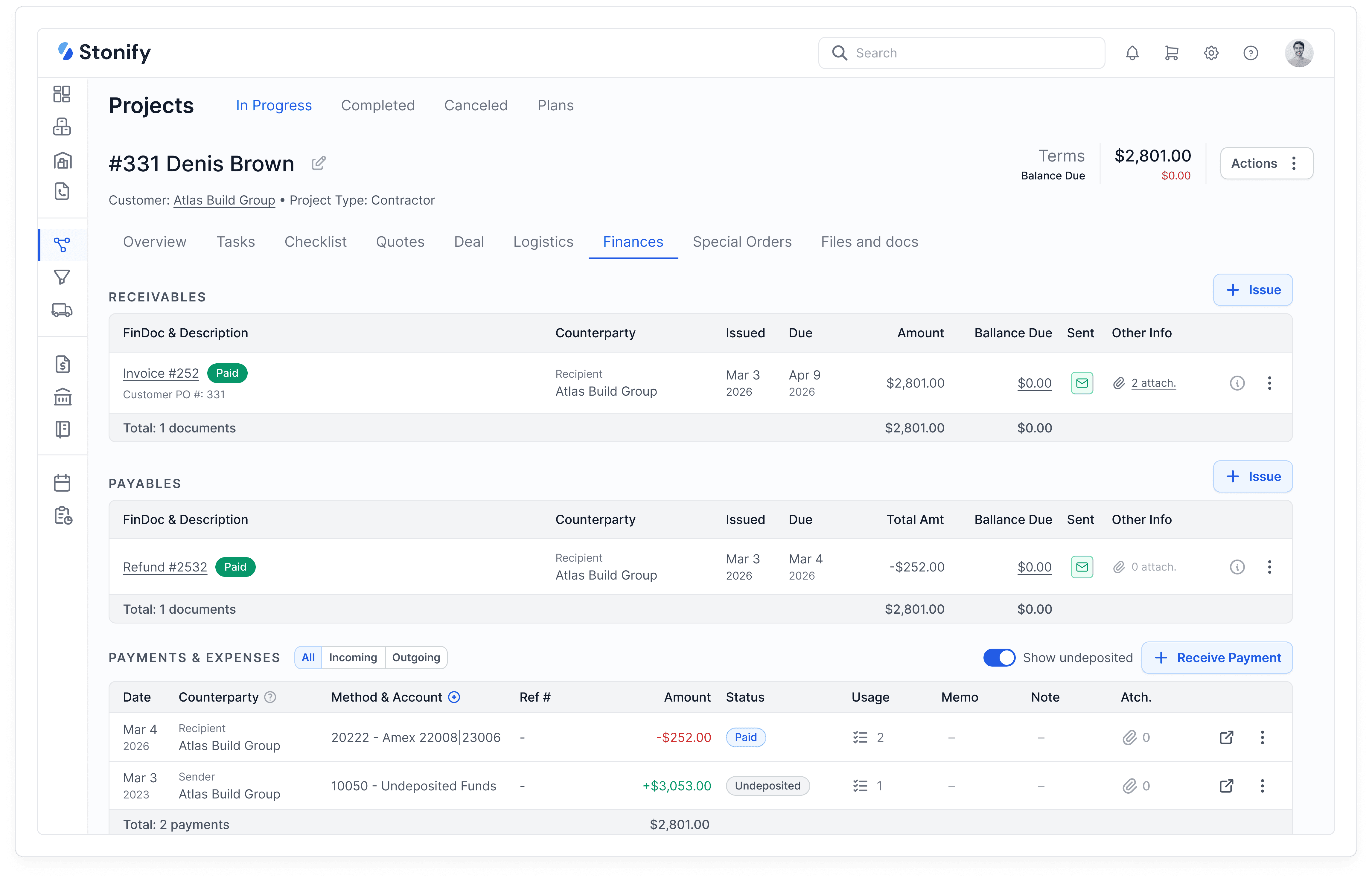
Many fabrication businesses rely on external accounting tools, but integrated financial management provides better operational insight.
Modern platforms may include features for:
invoicing
billing
payment tracking
banking
financial reporting
chart of accounts
reconciliation
When financial data connects directly to projects and materials, companies gain a clearer understanding of profitability.
Typical Software vs Modern Fabrication Platforms
Many fabrication companies still rely on several separate tools. However, newer platforms are designed to manage all operations within a single system.
The table below shows the difference between traditional software stacks and integrated fabrication platforms.
By managing all operations in one platform, fabrication businesses gain a clearer view of their projects and operations.
Example of an All-in-One Fabrication Platform
Some newer platforms are designed specifically for fabrication companies and combine several operational tools into a single system.
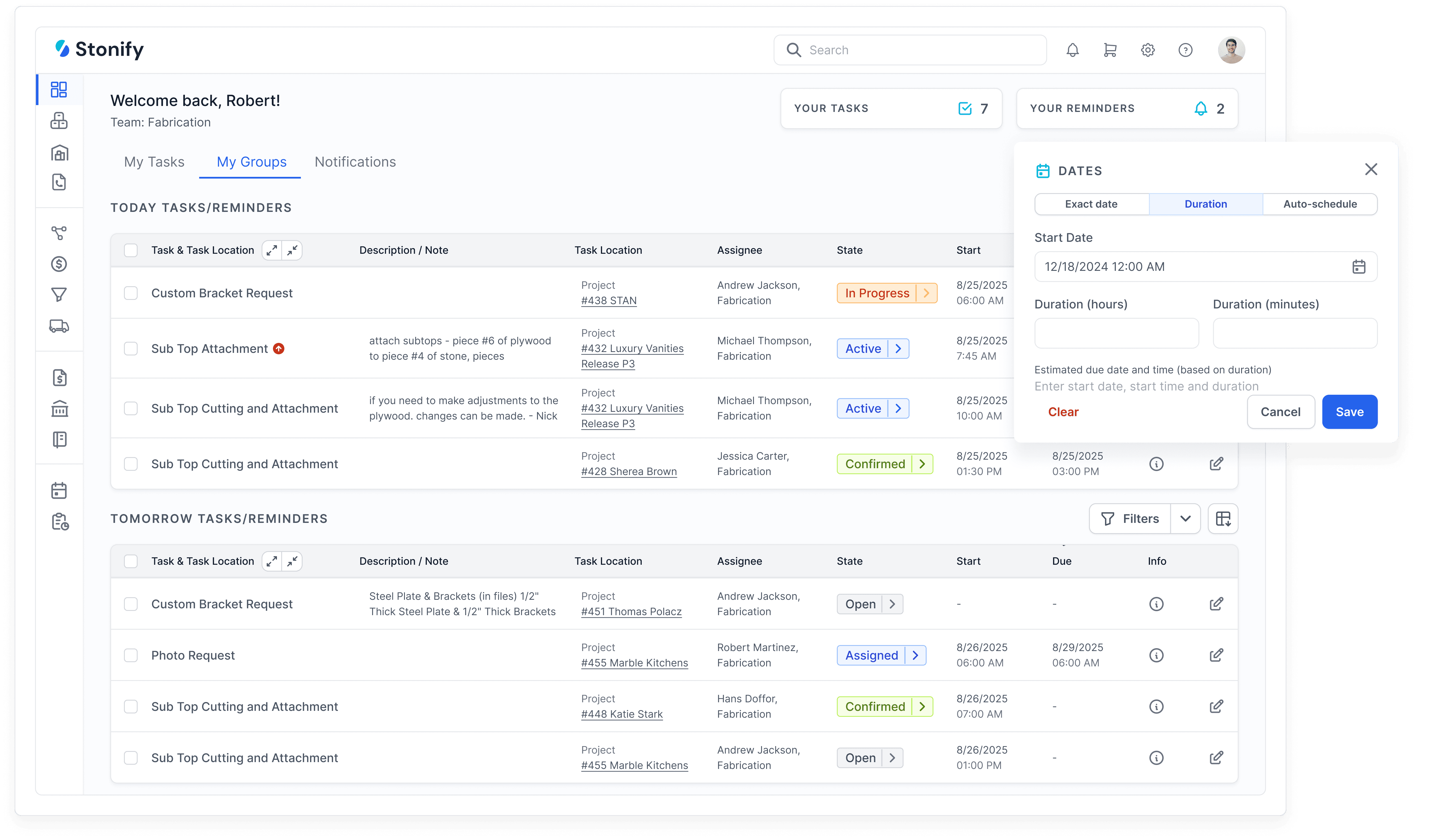
One example is Stonify, which integrates multiple capabilities used by countertop fabrication businesses.
Stonify includes tools for:
customer and lead management
quotes and estimating
countertop layout and drawing tools
project and installation management
slab inventory tracking
logistics and route planning
vendor and supplier management
accounting and financial reporting
mobile apps for warehouse and field teams
Instead of switching between several systems, fabrication companies can manage their entire operation within one platform.
Who Should Consider Fabrication Management Software
Integrated fabrication software is particularly valuable for businesses that manage complex projects, materials, and installation teams.
Companies that often benefit from these platforms include:
countertop fabrication shops
granite and quartz companies
stone distributors
kitchen and bathroom contractors
custom stone manufacturers
Businesses that handle both fabrication and installation tend to see the greatest benefits from integrated systems.
Final Thoughts
Choosing the right software is an important decision for any countertop fabrication company.
While many businesses still rely on multiple tools to manage their operations, integrated fabrication platforms are becoming increasingly common. By connecting CRM, quoting, layout planning, inventory management, logistics, and financial reporting within one system, fabrication companies can streamline operations and improve efficiency.
As the industry continues to modernize, companies that adopt integrated systems are often better positioned to scale their operations and manage projects more effectively.
Estimate Your Monthly Cost
Pick a plan, add your team, and watch your price update in real time.