How a Stone Fabrication Shop Works: From Slab to Installation
Jan 9, 2026
Stone fabrication is one of the most complex trades in construction. Unlike many industries, stone shops must coordinate custom design, heavy materials, precise fabrication, and on-site installation, often across multiple teams, locations, and timelines. Each job is unique, margins are tight, and small mistakes can become very expensive very quickly.
For shop owners, profitability isn’t just about selling more jobs. It's about how well the entire process fits together, from the slab purchase to the final installation. When information breaks down early, the consequences usually don’t show up right away. They appear later as material waste, rework, scheduling delays, overtime, or failed installation trips.
This article walks through how a stone fabrication shop operates step by step and highlights where most shops struggle as they grow, and how well-run operations gain an advantage.
The Stone Fabrication Workflow at a Glance
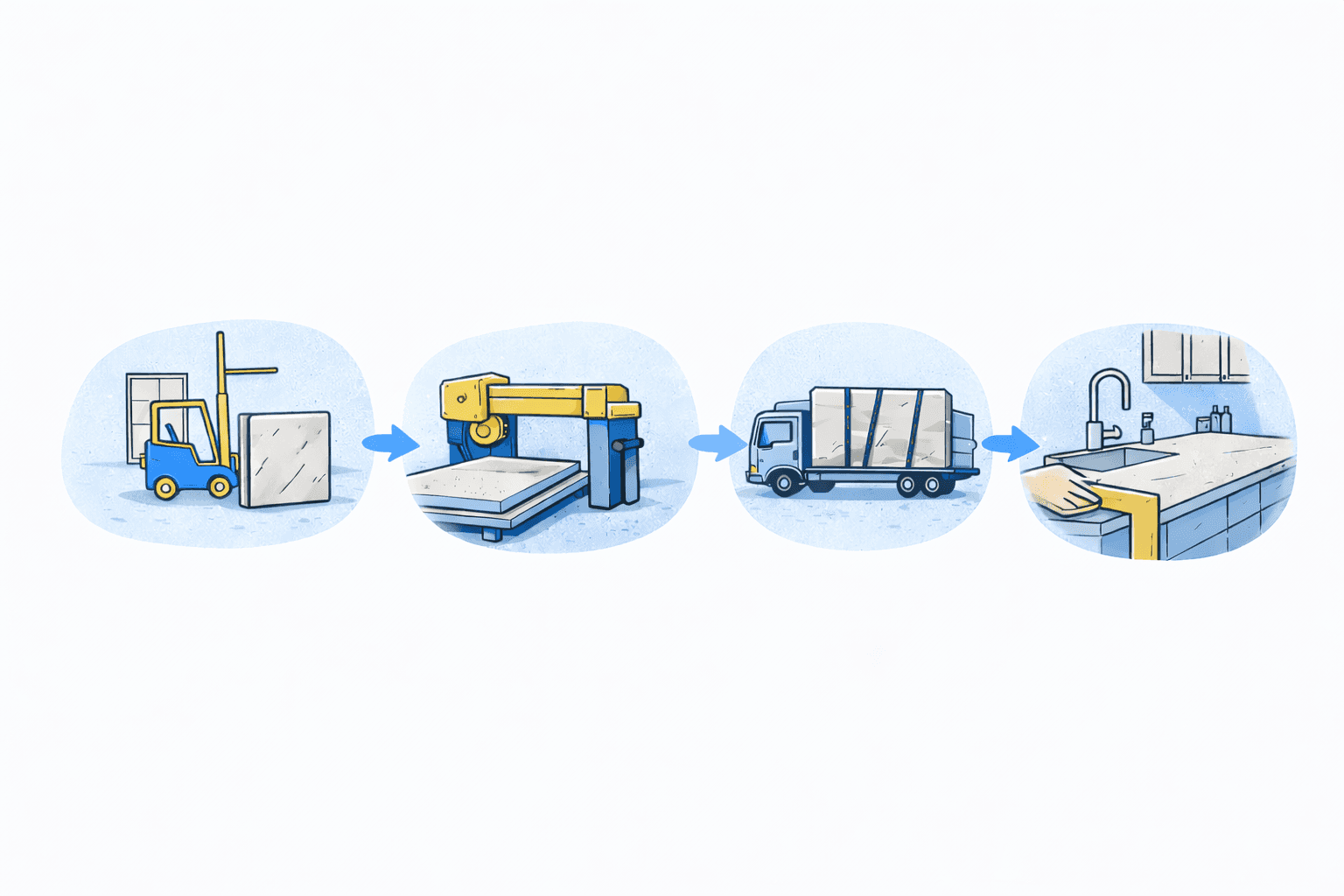
At a high level, most stone shops follow the same general path: material is purchased, jobs are sold and set up, measurements are taken, fabrication is planned, stone is fabricated, and countertops are installed. On paper, the process looks straightforward.
In reality, each stage depends heavily on accurate, timely information from the previous one. When details live in emails, spreadsheets, whiteboards, or paper folders, small inconsistencies compound. By the time a problem becomes visible, it has often already cost money.
For owners, the biggest risk isn’t a single mistake. It’s the accumulation of small inefficiencies that quietly erode margins over time.

Slab Purchasing and Inventory Management
All begins with material. Most stone shops purchase slabs in advance, either by stocking popular colors or buying material for upcoming jobs. This provides flexibility for sales but also creates a balancing act. The same inventory must support both selling and production at once.
When visibility is limited, troubles creep in:
Slabs get allocated to multiple jobs
Usable remnants are forgotten
"Just in case" additional materials are ordered
These small oversights raise costs and lower yield. Businesses that effectively manage their inventory know exactly what they have available, what is held, and what can be reused from remnants. With clear data, purchasing becomes strategic instead of reactive.
Shops that manage inventory well operate with clarity. They know what is in stock, what is already reserved, and what remnants are actually reusable. With reliable inventory information, purchasing decisions are made based on data rather than memory, reducing waste and protecting cash flow.
Sales, Estimating, and Job Setup
Once material is identified, the job moves into sales and estimating. While this stage may look administrative, it is one of the highest-risk points in the entire operation.
This is where critical decisions are defined: material selection, thickness, edge profiles, sinks, backsplashes, and the exact scope of work. In many shops, sales teams are under pressure to move quickly, which can lead to details being finalized before measurements are complete or changes continuing after production planning has already started.
Each change may seem small on its own. The real cost comes from timing. Once a job touches inventory allocation or scheduling, even minor adjustments ripple across the shop, disrupting plans that were already in motion.
Well-run shops protect themselves by clearly defining when a job is considered final. After that point, changes become deliberate decisions rather than casual edits. This discipline alone prevents rework, reduces material waste, and eliminates much of the internal frustration that comes from constantly reacting to late changes.
Templating and Measurements
Templating is the moment when a job becomes real.
Accurate measurements are the foundation for material optimization, seam placement, fabrication accuracy, and installation success. A single measurement error can easily turn into a full remake.
Many shops still rely on paper templates, photos stored on phones, or notes texted back to the office. This creates a dangerous gap between what happens in the field and what fabrication ultimately sees. When measurements are unclear or incomplete, fabricators are forced to make assumptions, schedulers pad timelines “just in case,” and owners absorb the cost when things go wrong.
Shops that reduce remakes focus on clean, consistent data flow. Capturing measurements digitally is only part of the solution. The real improvement comes when templating information moves directly into production planning without re-entry or guesswork. When that handoff is clean, surprises drop and outcomes become far more predictable.

Production Planning and Scheduling
Production planning is where good jobs turn into profitable jobs or costly ones.
At this stage, the shop must coordinate material availability, machine capacity, labor skills, and due dates (installation dates). Stone fabrication is not repetitive manufacturing. Every job is different, and a single disruption can cascade across the entire schedule.
As volume increases, many shops rely on tribal knowledge, whiteboards, or constant manual adjustments to keep things moving. This works - until it doesn’t. When planning breaks down, overtime becomes routine, bottlenecks form around key machines, and jobs are constantly re-prioritized just to stay afloat.
Another hidden cost of poor planning is how slabs are cut day to day. Many shops cut material one job at a time, creating remnants that are moved to inventory and then brought back out later for another job using the same material. This approach reduces overall yield and adds unnecessary labor as remnants are repeatedly handled instead of being planned intentionally.
More disciplined operations take a different approach. They look ahead at upcoming work and group jobs that share the same material, thickness, and finish. By nesting multiple jobs together in the same cutting cycle, they reduce waste, minimize handling, and keep machines focused on production rather than cleanup. Over time, this forward-looking planning improves both material efficiency and labor utilization.
Fabrication and Quality Control
Fabrication is where labor, material, and planning come together.
Cutting, CNC, polishing, and quality control all depend on one thing above all else: stable, accurate information. Most rework does not happen because of poor craftsmanship. It starts much earlier, when job details are unclear, selections change too late, or work begins based on assumptions instead of finalized decisions.
Once fabrication is underway, even a small error can force material to be re-cut, labor to be repeated, and machines to be pulled away from planned jobs. For owners, the real cost of rework isn’t just the mistake - it’s the lost opportunity to keep the shop flowing efficiently.
Successful shops reduce these issues by enforcing control on the shop floor. Tasks are assigned intentionally based on skill level, responsibilities are clearly defined, and critical job details are protected once work begins. This isn’t about restricting people. It’s about protecting the operation from avoidable mistakes that consume time, material, and margin.

Delivery and Installation
Installation is the most visible stage of the workflow - and the most expensive place for things to go wrong.
Even skilled installers can fail when preparation is incomplete. Some of the most common issues include:
Arriving on site with the wrong materials or missing key supplies
Misunderstanding the scope of work or site conditions
Leaving the jobsite before final quality checks are completed
Each failed installation trip compounds costs quickly. Labor is wasted, schedules are disrupted, and customer trust takes a hit. Many of these failures are preventable through better preparation and verification.
Shops that reduce failed trips focus on discipline before and during installation. Materials and supplies are confirmed before departure, job details are reviewed in advance, and quality is verified before crews leave the site. Catching issues onsite is far less costly than returning later to fix them.
Why Most Stone Shops Struggle to Scale
As volume grows, many shops hit the same ceiling. The root cause is rarely effort or talent - it’s fragmentation.
When job details, inventory, schedules, and installation information live in disconnected systems, blind spots form. Problems repeat quietly, owners react instead of plan, and margins suffer without a clear explanation why.
How Modern Stone Shops Improve This Workflow
Shops that scale profitably focus on visibility and control. They centralize job and material data, define clear control points in the workflow, and plan based on real capacity instead of daily firefighting.
Just as importantly, they make mistakes visible. Issues are documented, patterns are identified, and real examples are used as training to prevent repeat problems. Over time, this creates a learning operation - one that improves continuously instead of repeating the same costly errors.
Modern stone ERP platforms like Stonify are designed around this exact workflow, connecting inventory, job details, production
planning, and field execution into a single system.

Final Thoughts for Shop Owners
Stone fabrication success isn’t about working harder. It’s about protecting decisions once they matter.
When inventory, planning, fabrication, and installation operate with clarity, waste drops, rework declines, schedules stabilize, and margins improve. Understanding how your shop truly operates from buying material to installation is the first step toward building a more predictable, scalable, and profitable operation.
Ready to Run a Smarter Stone Operation?
Book a demo to see how Stonify can reduce costs at your shop.
Other Articles
How a Stone Fabrication Shop Works: From Slab to Installation
Jan 9, 2026
Stone fabrication is one of the most complex trades in construction. Unlike many industries, stone shops must coordinate custom design, heavy materials, precise fabrication, and on-site installation, often across multiple teams, locations, and timelines. Each job is unique, margins are tight, and small mistakes can become very expensive very quickly.
For shop owners, profitability isn’t just about selling more jobs. It's about how well the entire process fits together, from the slab purchase to the final installation. When information breaks down early, the consequences usually don’t show up right away. They appear later as material waste, rework, scheduling delays, overtime, or failed installation trips.
This article walks through how a stone fabrication shop operates step by step and highlights where most shops struggle as they grow, and how well-run operations gain an advantage.
The Stone Fabrication Workflow at a Glance
At a high level, most stone shops follow the same general path: material is purchased, jobs are sold and set up, measurements are taken, fabrication is planned, stone is fabricated, and countertops are installed. On paper, the process looks straightforward.
In reality, each stage depends heavily on accurate, timely information from the previous one. When details live in emails, spreadsheets, whiteboards, or paper folders, small inconsistencies compound. By the time a problem becomes visible, it has often already cost money.
For owners, the biggest risk isn’t a single mistake. It’s the accumulation of small inefficiencies that quietly erode margins over time.
Slab Purchasing and Inventory Management
All begins with material. Most stone shops purchase slabs in advance, either by stocking popular colors or buying material for upcoming jobs. This provides flexibility for sales but also creates a balancing act. The same inventory must support both selling and production at once.
When visibility is limited, troubles creep in:
Slabs get allocated to multiple jobs
Usable remnants are forgotten
"Just in case" additional materials are ordered
These small oversights raise costs and lower yield. Businesses that effectively manage their inventory know exactly what they have available, what is held, and what can be reused from remnants. With clear data, purchasing becomes strategic instead of reactive.
Shops that manage inventory well operate with clarity. They know what is in stock, what is already reserved, and what remnants are actually reusable. With reliable inventory information, purchasing decisions are made based on data rather than memory, reducing waste and protecting cash flow.
Sales, Estimating, and Job Setup
Once material is identified, the job moves into sales and estimating. While this stage may look administrative, it is one of the highest-risk points in the entire operation.
This is where critical decisions are defined: material selection, thickness, edge profiles, sinks, backsplashes, and the exact scope of work. In many shops, sales teams are under pressure to move quickly, which can lead to details being finalized before measurements are complete or changes continuing after production planning has already started.
Each change may seem small on its own. The real cost comes from timing. Once a job touches inventory allocation or scheduling, even minor adjustments ripple across the shop, disrupting plans that were already in motion.
Well-run shops protect themselves by clearly defining when a job is considered final. After that point, changes become deliberate decisions rather than casual edits. This discipline alone prevents rework, reduces material waste, and eliminates much of the internal frustration that comes from constantly reacting to late changes.
Templating and Measurements
Templating is the moment when a job becomes real.
Accurate measurements are the foundation for material optimization, seam placement, fabrication accuracy, and installation success. A single measurement error can easily turn into a full remake.
Many shops still rely on paper templates, photos stored on phones, or notes texted back to the office. This creates a dangerous gap between what happens in the field and what fabrication ultimately sees. When measurements are unclear or incomplete, fabricators are forced to make assumptions, schedulers pad timelines “just in case,” and owners absorb the cost when things go wrong.
Shops that reduce remakes focus on clean, consistent data flow. Capturing measurements digitally is only part of the solution. The real improvement comes when templating information moves directly into production planning without re-entry or guesswork. When that handoff is clean, surprises drop and outcomes become far more predictable.
Production Planning and Scheduling
Production planning is where good jobs turn into profitable jobs or costly ones.
At this stage, the shop must coordinate material availability, machine capacity, labor skills, and due dates (installation dates). Stone fabrication is not repetitive manufacturing. Every job is different, and a single disruption can cascade across the entire schedule.
As volume increases, many shops rely on tribal knowledge, whiteboards, or constant manual adjustments to keep things moving. This works - until it doesn’t. When planning breaks down, overtime becomes routine, bottlenecks form around key machines, and jobs are constantly re-prioritized just to stay afloat.
Another hidden cost of poor planning is how slabs are cut day to day. Many shops cut material one job at a time, creating remnants that are moved to inventory and then brought back out later for another job using the same material. This approach reduces overall yield and adds unnecessary labor as remnants are repeatedly handled instead of being planned intentionally.
More disciplined operations take a different approach. They look ahead at upcoming work and group jobs that share the same material, thickness, and finish. By nesting multiple jobs together in the same cutting cycle, they reduce waste, minimize handling, and keep machines focused on production rather than cleanup. Over time, this forward-looking planning improves both material efficiency and labor utilization.
Fabrication and Quality Control
Fabrication is where labor, material, and planning come together.
Cutting, CNC, polishing, and quality control all depend on one thing above all else: stable, accurate information. Most rework does not happen because of poor craftsmanship. It starts much earlier, when job details are unclear, selections change too late, or work begins based on assumptions instead of finalized decisions.
Once fabrication is underway, even a small error can force material to be re-cut, labor to be repeated, and machines to be pulled away from planned jobs. For owners, the real cost of rework isn’t just the mistake - it’s the lost opportunity to keep the shop flowing efficiently.
Successful shops reduce these issues by enforcing control on the shop floor. Tasks are assigned intentionally based on skill level, responsibilities are clearly defined, and critical job details are protected once work begins. This isn’t about restricting people. It’s about protecting the operation from avoidable mistakes that consume time, material, and margin.
Delivery and Installation
Installation is the most visible stage of the workflow - and the most expensive place for things to go wrong.
Even skilled installers can fail when preparation is incomplete. Some of the most common issues include:
Arriving on site with the wrong materials or missing key supplies
Misunderstanding the scope of work or site conditions
Leaving the jobsite before final quality checks are completed
Each failed installation trip compounds costs quickly. Labor is wasted, schedules are disrupted, and customer trust takes a hit. Many of these failures are preventable through better preparation and verification.
Shops that reduce failed trips focus on discipline before and during installation. Materials and supplies are confirmed before departure, job details are reviewed in advance, and quality is verified before crews leave the site. Catching issues onsite is far less costly than returning later to fix them.
Why Most Stone Shops Struggle to Scale
As volume grows, many shops hit the same ceiling. The root cause is rarely effort or talent - it’s fragmentation.
When job details, inventory, schedules, and installation information live in disconnected systems, blind spots form. Problems repeat quietly, owners react instead of plan, and margins suffer without a clear explanation why.
How Modern Stone Shops Improve This Workflow
Shops that scale profitably focus on visibility and control. They centralize job and material data, define clear control points in the workflow, and plan based on real capacity instead of daily firefighting.
Just as importantly, they make mistakes visible. Issues are documented, patterns are identified, and real examples are used as training to prevent repeat problems. Over time, this creates a learning operation - one that improves continuously instead of repeating the same costly errors.
Modern stone ERP platforms like Stonify are designed around this exact workflow, connecting inventory, job details, production
planning, and field execution into a single system.
Final Thoughts for Shop Owners
Stone fabrication success isn’t about working harder. It’s about protecting decisions once they matter.
When inventory, planning, fabrication, and installation operate with clarity, waste drops, rework declines, schedules stabilize, and margins improve. Understanding how your shop truly operates from buying material to installation is the first step toward building a more predictable, scalable, and profitable operation.
Ready to Run a Smarter Stone Operation?
Book a demo to see how Stonify can reduce costs at your shop.